

The Norwegian Dawn cruise ship flunks health inspection
Fruit flies, mold, and refrigeration failures, oh my!
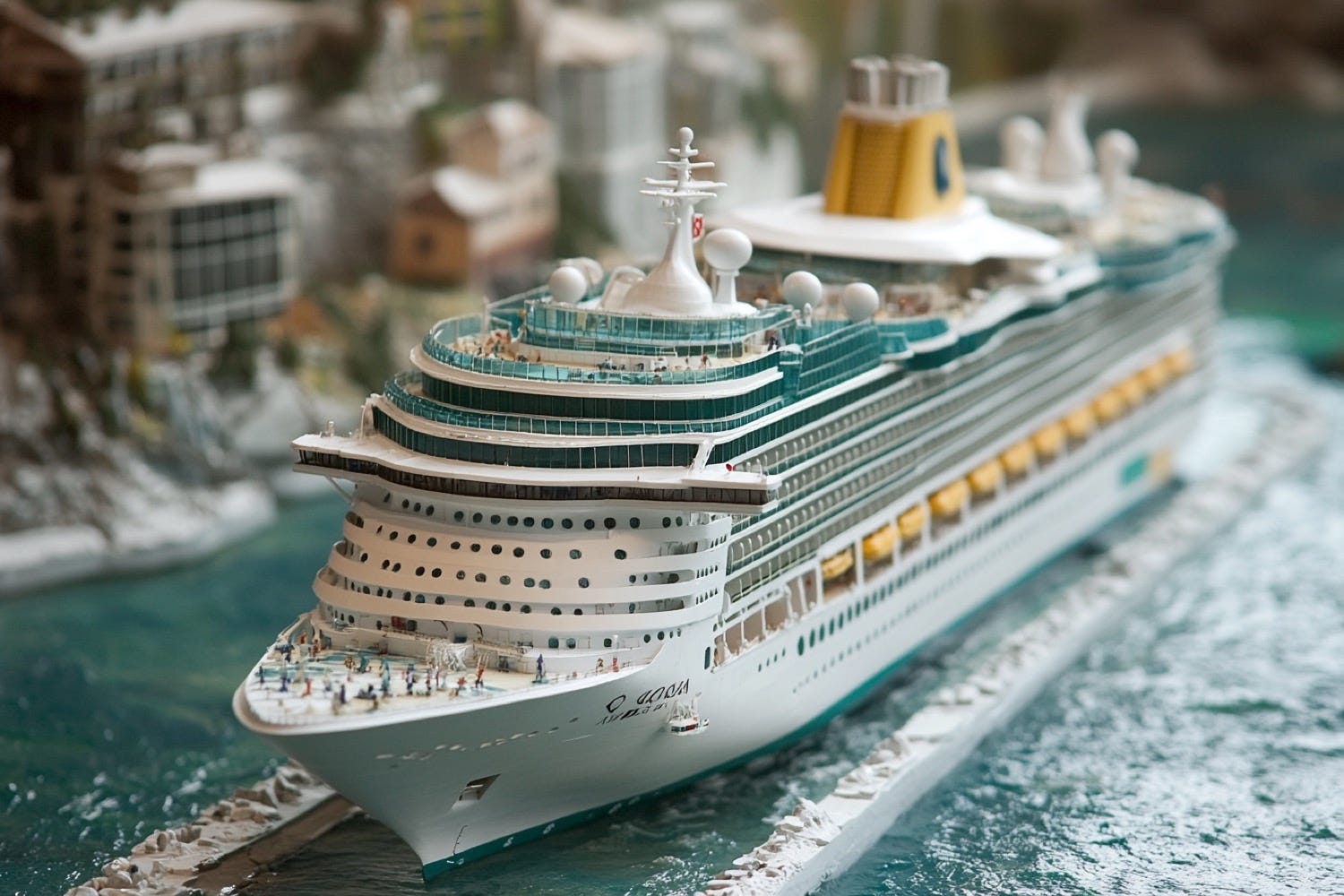
Cruise ships sure are having a moment. Just in the first half of 2026, norovirus outbreaks sickened 115 people on the Caribbean Princess in early May, dozens on the Oceania Insignia in early April, and at least 153 on the Star Princess in March. In February, the Norwegian Cruise Line notified “guests” that two passengers had been diagnosed with Legionnaires’ disease after cruising on the Norwegian Encore in December 2025. And, of course, we’re all following the ongoing saga of the cursed hantavirus cruise ship, the MV Hondius.
I’ve said it before, and I’ll say repeat it until my dying days — you couldn’t pay me to step foot on a cruise ship. And under the current administration, they seem even worse than usual, as the Vessel Sanitation Program, the program responsible for inspecting cruise ships for public health concerns, is having what StatNews calls a “turbulent year” — which seems to be putting it mildly. Earlier this month, Luis Rodríguez, the top U.S. official who has been responsible since 2023 for public health on cruise ships, retired. StatNews reports that a year ago, in April 2025, the full-time employees in the Vessel Sanitation Program were laid off. CBS News further explained that the layoffs, which occurred in the middle of a record-breaking number of norovirus outbreaks on cruise ships, included the epidemiologist that led the CDC’s outbreak response on cruise ships. They also reported that only twelve U.S. Public Health Service officers remained with the Vessel Sanitation Program, including only one epidemiologist who was new to the position and still in the process of training. Cruise Law News explains that inspectors with the Vessel Sanitation Program evaluate eight areas of cruise ships: their medical centers, drinking water, kitchens and dining areas, swimming pools, housekeeping practices, pest management, child activity centers, and HVAC systems.
The CDC assures us that, somehow, the program is still operating effectively. A CDC spokesperson stated recently that the Vessel Sanitation Program is “fully staffed, including epidemiologists, and continues to carry out all core program activities for cruise ships under U.S. jurisdiction.” However, as Snopes points out, it’s unclear what the CDC means by “fully staffed.” Furthermore, when Snopes asked the CDC how many employees are currently working with the program, they didn’t get a response. It’s not the first time the CDC isn’t sharing information, either. StatNews reported earlier this month that HHS declined their request to interview a CDC expert about the hantavirus outbreak aboard the Dutch ship, the MV Hondius, as well as an inquiry about how many Americans were onboard the ship and how they are being monitored.
Last week Chuck Schumer wrote a scathing letter to HHS Secretary RFK, Jr., expressing “deep concern” over the “inadequate response” of the HHS and the Department of State regarding the hantavirus outbreak. In the letter, Schumer stated that decisions made by the Trump Administration, including the “reckless” firing of essential public health officials at the CDC’s Vessel Sanitation Program and the Port Health Stations, have “weakened the country’s ability to protect American citizens and respond to emerging global health threats.” After outlining the public health failures of the Trump administration, Schumer calls on HHS Secretary Kennedy to provide details about how the CDC is responding to the hantavirus outbreak.
Amid the cuts and turmoil, last week, a cruise ship failed a CDC health inspection for the first time in 2026. Cruise Law News reports that the first ship to receive a failing score for the year, the Norwegian Dawn, scored an 84 (anything under 85 is failure) on March 29, 2026. The CDC conducted the surprise inspection while the ship was docked in Tampa, Florida, and documented many health violations, including:
Two fruit flies were present at the buffet line during lunch service. One fly was resting on bread.
Greater than a day’s accumulation of pooled water with a mold-like growth soiled the bottom of the soda cabinet where soda syrups and carbonation equipment were stored.
Liquid dripped from the deckhead and pooled on and around the utility sink faucet and handles. The source of liquid was unknown.
The ambient air temperature (of the dairy storage) measured 47°F by the inspector and 46°F by the thermometer affixed to the evaporator’s drip pan. Five 5-gallon bags of fat-free milk and half and half were stored in this area with internal temperatures above 41°F (the CDC recommends food be stored at or below 41°F). Large boxes of these dairy products were stored in this room side-by-side in a manner that restricted air flow.
Cruise Law News states that failed health inspections “have become more of a rarity in recent years,” as the last ship failure occurred in July 2025, while in 2017 alone, thirteen ships failed their inspections. Somehow, though, I’m not reassured by these numbers, as it might not be the case that ships are actually safer and cleaner, but, rather, that there aren’t enough public health officials available to thoroughly inspect and monitor the ships for public health concerns. As Futurism writes, “it’s difficult to believe that it’s [the VSP] fully recovered from losing so much expertise,” as it takes at least six months to train new inspectors, and not many folks are lining up for the job. I’ll definitely be sticking to my ‘no cruise ships’ convictions. But to each their own, I guess – if you go on a cruise, enjoy your fruit flies, mold, and refrigeration failures! Stay safe, friends.
 |
|
IIRC the contracts that come along with the tickets make it very difficult for passengers to sue successfully.
My wife and I stopped cruising after one or the other of us got COVID a total of four times out of six cruises. Once was after mandatory COVID screening dockside before boarding. People don't buy the insurance that would let them walk away before boarding if they didn't like the color of the stacks, or, say, suffering from COVID or some other communicable disease. Plus, the uncrowded experiences in the commercials do not reflect the overcrowded reality.