

Sketchy deaths are nearly as likely on cruise ships as contracting an infectious disease
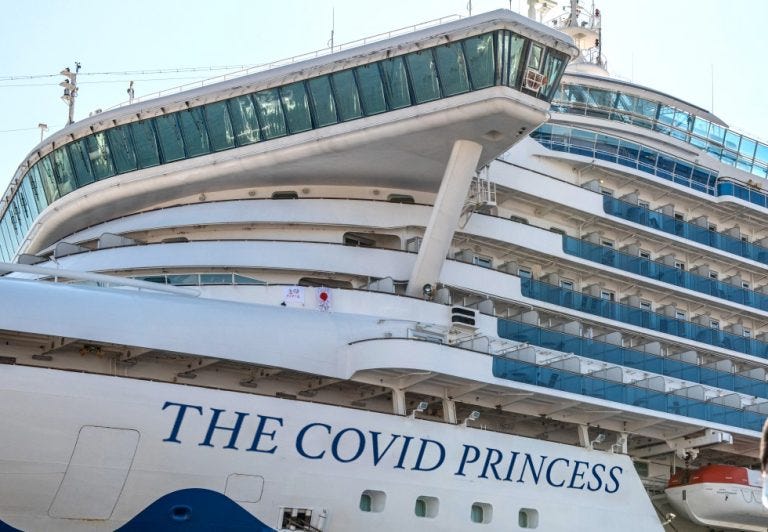
Cruise lines love to advertise all-you-can-eat shrimp and unlimited drinks, but they’re a little less chatty about the number of passengers who die on board. A new wrongful death lawsuit against Royal Caribbean is shining a light on an unsettling reality: more people are dying at sea than you might think, and it’s not just norovirus.
Last week, Aguilar filed a wrongful death lawsuit in Florida against Royal Caribbean Cruises. In the lawsuit, Aguilar’s lawyers said Virgil purchased the cruise line’s unlimited drink package and alleged that he was served at least 33 drinks while on board, as well as that security used excessive force while detaining him, causing his death. The Los Angeles County Department of Medical Examiner has ruled Virgil’s death a homicide, attributing his cause of death to “combined effects of mechanical asphyxia, obesity, cardiomegaly, and ethanol intoxication.”
While a death under extenuating circumstances like this is uncommon, deaths on cruise ships are not. While there is no official data on the number of passengers who die on cruise ships — due to discrepancies with reporting laws in different countries — a study from the International Journal of Travel Medicine and Global Health reported that dozens of people die on cruise ships each year. Newsweek puts that number as high as around 200 passengers a year. Cory Buckner, a cruise ship medic from Bowling Green, Kentucky, said he attended to about a half a dozen deaths during his time working on ships between 2012 and 2014.
“You can obviously never predict a death but the itinerary would kind of give you some educated guesses. LA to Hawaii was always rough because of the remaining vets that wanted to go one last time with their families,” Buckner told SFGATE in a direct message on social media. “Bucket list destination cruises like the French Polynesian or the Mediterranean were always of concern because people would save for a really long time to be able to take the cruise and then not cancel it if they got sick. This would put them at a disadvantage when it came time to do anything strenuous in port. Heart attacks were not uncommon at all.”
In the latest case, a California man reportedly consumed a stunning 33 alcoholic beverages before he was forcibly restrained by ship security. He later died. The coroner ruled it a homicide. It turns out that specific cruise routes, like those to Ensenada or Hawaii, are especially prone to deaths, not just from pre-existing conditions, but from alcohol overservice, poor medical response, or allegedly aggressive tactics from crew. And because cruise ships sail under “flags of convenience,” it’s often difficult to hold anyone accountable.
Never understood the appeal myself, but people that want to go on a cruise shouldn’t have to worry that the staff will kill them-first by overserving then by asphyxiation.
the impression continues to converge on Futurama's "Near Death Star" [1] not the least at the shear size of the things.
[1] https://futurama.fandom.com/wiki/Near_Death_Star
https://www.theinfosphere.org/Near-Death_Star