

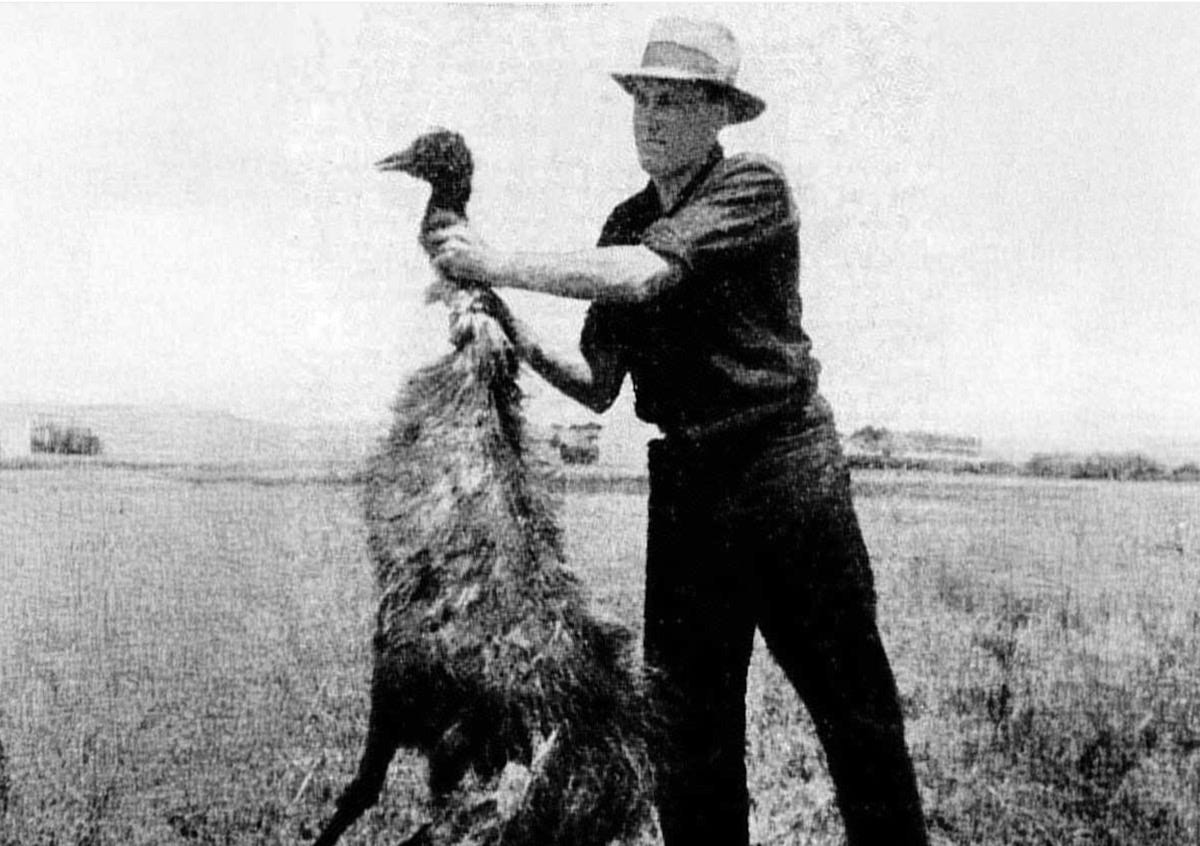
In late 1932, approximately 20,000 emus descended on the wheat farms of Western Australia’s Campion district, destroying crops and punching holes in fences that let rabbits through. The farmers, many of them WWI veterans, knew exactly what to ask for: machine guns. Defense Minister Sir George Pearce agreed, and the Royal Australian Artillery deployed with two Lewis guns and 10,000 rounds of ammunition.
It did not go well. On November 2, soldiers attempted to ambush 50 emus, but the birds scattered into small groups and ran in unpredictable patterns. A dozen were killed. Two days later, over 1,000 emus approached a dam where Major G.P.W. Meredith had set up an ambush. The gunners waited until the birds were close, opened fire — and the gun jammed after 12 kills. The emus fled in all directions. By mid-November, the military had used 2,500 rounds and claimed just 200 confirmed kills.
The press had a field day. One ornithologist noted that each emu seemed to have “weights and measures” knowledge, staying just out of effective range. A local newspaper observed that the birds had adopted guerrilla tactics, breaking into small units that made mass killing impossible. In parliament, Senator James Dunn mockingly referred to Pearce as the “Minister of the Emu War.”
After a month of operations, the final tally: 986 emus confirmed killed out of an estimated 20,000. The birds continued destroying crops. The military withdrew. Australia would later switch to a bounty system, which proved far more effective.