
How subtraction, not addition, may have been the secret to Egypt’s pyramids
Every few years, someone comes up with a new "this is how the pyramids were built" theory.
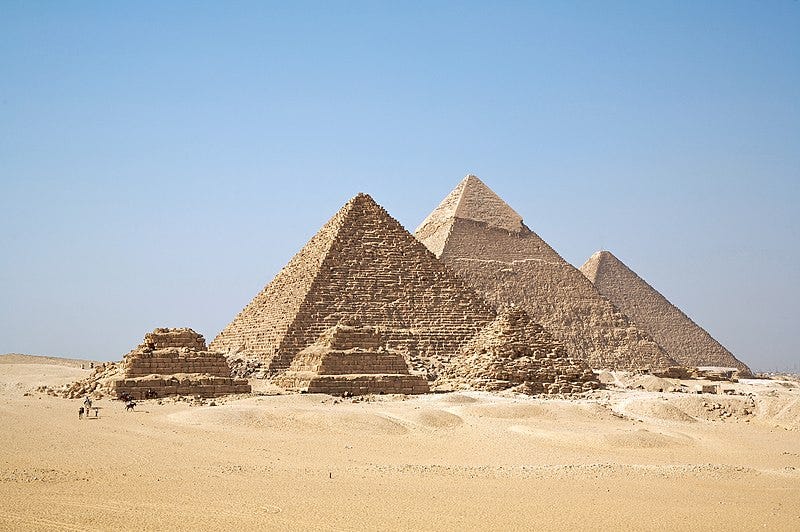
Every few years, someone comes up with a new “this is how the pyramids were built” theory. In addition to aliens or long-forgotten super technologies, many theories rely on unfeasible ramps that’d never work. This theory works.
This theory treats the pyramids as an engineering problem and takes the constraints very seriously. Weight of the stones, limits of human labor, friction, time, and what is actually possible. Pyramid construction isn’t a miracle; it’s a logistics problem solved by a state with near-unlimited labor and a fantastic understanding of geometry.
Rather than build a pyramid from the ground up, this theory surmises the Egyptians built a trapezoid. Reducing the trapezoid into a pyramid allows for near-perfect measurements, necessary for the Egyptian pyramids’ long-standing pointed peaks. The materials “left over” from reducing the trapezoid were then, in very efficient Egyptian fashion, used to produce the next pyramid on the plateau.
Rather than claiming certainty, this theory presents a well-founded solution to the question of how the Egyptians built these amazing structures. It not only works physically, but fits into Egyptian culture in a way that might just be right.