

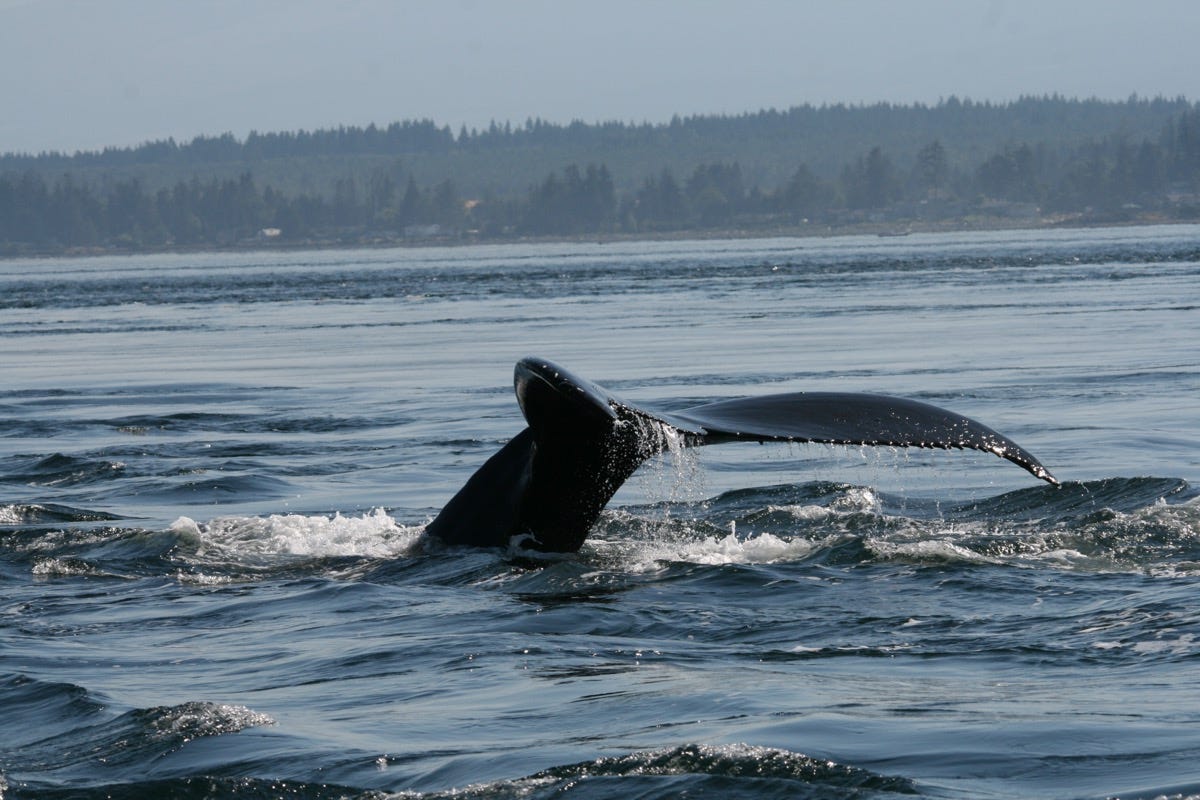
Gray whales beat commercial whaling, only to run into a warmer Arctic that is quietly starving them.
Gray whales were one of the great marine mammal recovery stories. Commercial whaling nearly wrecked them, protections helped bring them back, and by 2016, the eastern North Pacific population was estimated at about 27,000 animals.
Now they are in trouble again.
In the past seven years, as climate change increasingly deprives them of nutritious prey, many gray whales haven’t been able to get fat enough to endure their long trek or to participate in the energy-sapping business of breeding, gestating, giving birth and nursing calves. The annual number of calves has plunged in this period from 1,600 to 85, according to a NOAA count.
“If you put all this together, it is painting a really grim picture,” said Calambokidis, at Cascadia Research in Olympia.
He said this year’s pace of gray whale strandings in Washington is faster than in any previous year, adding that “since the population of these whales is substantially reduced, the proportion of death is already much greater than before.”
The problem appears to start in the Arctic, where gray whales normally spend the summer vacuuming up fat-rich crustaceans from seafloor sediment before their long migration south. Warming waters, less sea ice, and changing currents are disrupting that food supply. A 2023 study in Science linked gray whale boom-and-bust cycles to Arctic prey availability and access to feeding areas.
That leaves whales too thin for the migration, too weak to avoid other hazards, and too underfed to produce many calves. Some are turning into Puget Sound in search of food. Many are simply dying.
It is a brutal arithmetic: a whale can be saved by a harpoon ban only to die from climate change.