

GM’s shiny tomorrow came with a very dark underside
General Motors wowed America with its Futurliners.
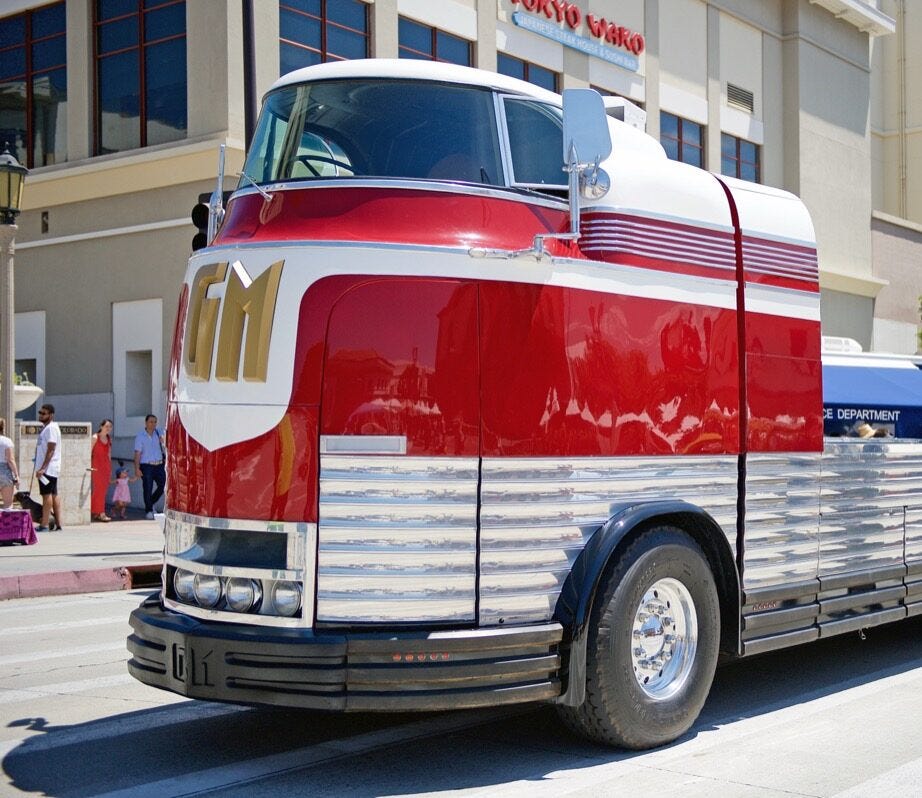
General Motors wowed America with its Futurliners. Massive, gleaming roadshow machines that brought visions of jet engines, television, and a shining future to millions of people who had never seen anything like it.
What if the most beautiful vehicle General Motors ever built was designed not to take you somewhere, but to make you believe something? In 1940, GM commissioned twelve thirty-three-foot, fifteen-ton art deco machines called Futurliners — rolling exhibition stages designed by legendary stylist Harley Earl — and sent them barnstorming across America to showcase jet engines, microwave ovens, and television to small-town crowds who had never seen any of it. Over three million people visited in a single year. It was the most ambitious corporate road show in history, and it worked exactly as intended: it made Americans associate the future with General Motors. But while those gleaming red giants were selling a chrome-plated tomorrow, the company behind them was profiting from Nazi Germany’s military buildup through its Opel subsidiary, funding the dismantling of American streetcar systems through National City Lines, spying on its own workers, and fighting a brutal war against labor organizers in Flint, Michigan. This video traces the full arc — from Alfred Sloan’s invention of planned obsolescence and Harley Earl’s Beauty Parlor origins, through the Futurliners’ spectacular rise and quiet abandonment, to their rediscovery as four-million-dollar auction icons — and asks the question that the Parade of Progress never wanted you to consider: whose future were they really building?
While those rolling spectacles sold a dream of progress, GM was busy profiting from Nazi rearmament through Opel, dismantling public transit across the U.S., and crushing labor at home.