

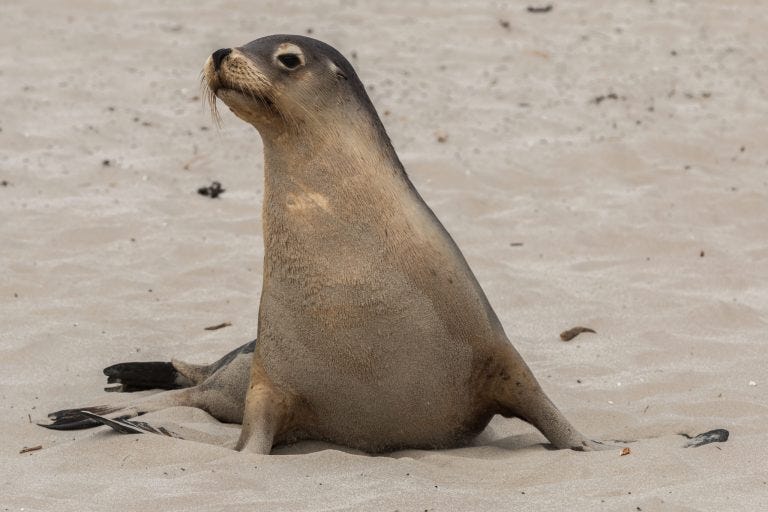
Congressman Nick Begich, a Republican representative from Alaska, introduced a bill in July 2025 that’ll drastically weaken the fifty year old Marine Mammal Protection Act.
The Marine Mammal Protection Act was not written because whales, seals, and dolphins were thriving. It exists because industrial fishing, shipping, sonar, and offshore development were killing them at scale. Its core idea is blunt and intentionally inconvenient: economic activity does not automatically outrank biological survival. The law, which balances conservation with commerce, requires industries to slow down, reroute, retrofit, or absorb costs so that marine mammals are not treated as collateral damage.
At a time when all eyes are on Venezuela and Greenland, a legislative proposal is being floated, largely under the radar, that would gut the act. If this proposal were to gain traction, it would not only deal a devastating blow to marine life and the health of our oceans, but it would also be devastating to the economies of coastal communities whose livelihoods depend on a healthy ocean.
The proposal would downgrade the act’s goals from “healthy, functioning populations” to mere survival. It would weaken safeguards against industrial threats such as oil and gas activity, vessel strikes and seismic blasting. It would also eliminate “take reduction plans” that reduce accidental deaths in fishing gear, blur science-based definitions that make the law enforceable and delay protections for critically endangered North Atlantic right whales until 2035 — a species of less than 400.
Supporters argue marine mammals have “recovered” and no longer need strong protections. That gets the story backward: Many populations improved because the Marine Mammal Protection Act worked. In 1972, the world’s population was about 3.85 billion. Today, it is roughly 8.3 billion — more than twice as many people and far more pressure on the ocean. The threat hasn’t diminished; it has only been kept at bay, thanks to the act.
When lawmakers say protections are “too strict,” what they really mean is that survival has become negotiable again.
# ...what they really mean is that survival has become negotiable again.
.
Because they, themselves, have been bought and paid for.....
> The threat hasn’t diminished; it has only been kept at bay
oh... so we have to start protecting bays now, too!? where will it end? a greener earth, a bluer ocean!? "save the planet"? it's more like save the.... oh. i guess it is save the planet. oops.